Most organisations don’t struggle because they lack learning content.
They struggle because learners lose momentum.
Courses become difficult to navigate. Expectations aren’t always clear. Employees feel overwhelmed by too many choices or unsure where to focus next. Over time, even strong training content can underperform because the learning experience itself creates friction.
The good news? Improving your LMS experience doesn’t always require a major redesign.
In many cases, small changes can significantly improve learner engagement, course completion, and overall usability.
Here are five simple LMS improvements that can make an immediate impact.
1. Make learner progress visible
One of the quickest ways to improve engagement is to help learners clearly see what they’ve completed — and what still needs attention.
When progress isn’t visible, learners often:
- Revisit the same content repeatedly
- Miss important resources
- Feel uncertain about where they are in the course
Adding visible progress tracking creates clarity and momentum. It also gives learners a sense of achievement as they move through training.
In platforms like Moodle, activity completion features can help create this experience automatically.
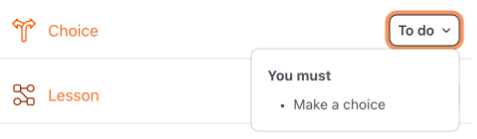
2. Clarify what “complete” actually means
A common frustration in online learning is uncertainty around expectations.
If learners don’t know:
- Which activities are mandatory
- What needs to be submitted
- What defines course completion
…engagement drops quickly.
Clear completion criteria reduce confusion and help employees progress with confidence. It also improves reporting accuracy for managers and compliance teams.
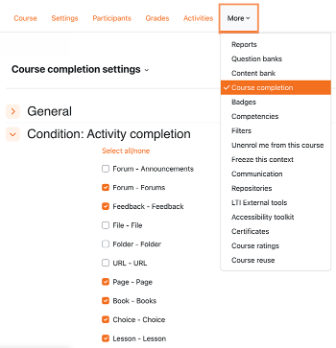
3. Design learning for real schedules
One of the biggest barriers to workplace learning is time.
Employees are constantly assessing:
“Do I actually have enough time to start this right now?”
Adding estimated durations to learning activities helps learners make informed decisions and reduces hesitation.
Shorter, clearly defined learning segments also feel more achievable — particularly for busy teams balancing training alongside operational work.
This is one reason microlearning continues to gain traction across corporate learning environments.

4. Reduce decision fatigue with guided pathways
Too much freedom inside an LMS can unintentionally overwhelm learners.
When employees are presented with too many options at once, they’re more likely to:
- Skip important steps
- Miss context
- Disengage entirely
Structured learning pathways help reduce cognitive load by guiding learners through content in a logical sequence.
This doesn’t mean restricting everything. It means creating enough direction to make progression feel intuitive.
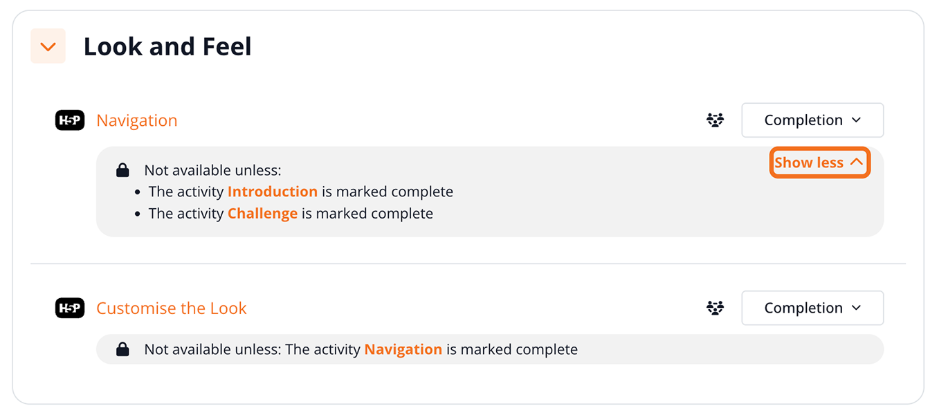
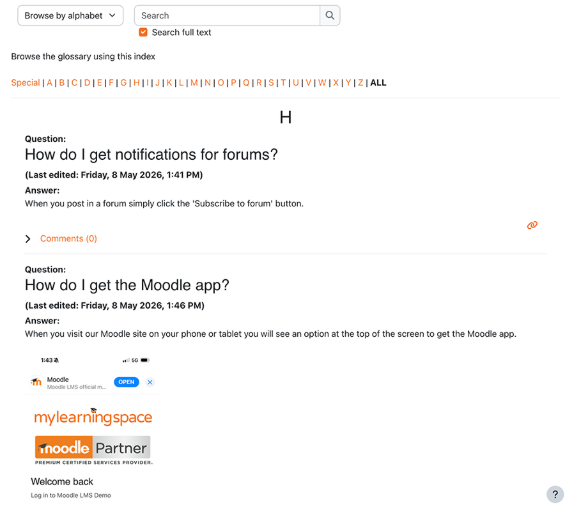
5. Anticipate learner questions before they become support tickets
Every course has recurring questions.
Instead of responding to the same issues repeatedly, build answers directly into the learning environment.
Simple additions like:
- FAQs
- searchable glossaries
- quick-reference resources
…can significantly improve the learner experience while reducing support overhead for administrators and trainers.
More importantly, they help learners stay focused instead of getting stuck.
Why small LMS improvements matter
Organisations often delay LMS improvements because they assume meaningful change requires large projects, redesigns, or platform migrations.
In reality, learner experience improves through consistent optimisation.
Small enhancements compound over time:
- Better navigation improves completion rates
- Clearer structure reduces learner frustration
- Simpler pathways increase engagement
- Faster access to answers improves confidence
The organisations seeing the best learning outcomes aren’t necessarily rebuilding everything.
They’re continuously refining the experience.
Final Thougths
A high-performing LMS isn’t just a content repository.
It’s an environment designed to help learners move forward with clarity and confidence.
And often, the biggest improvements come from the smallest changes.