AI is no longer a future consideration for learning leaders — it is a present responsibility.
As artificial intelligence becomes embedded in workplace systems, the question is no longer whether organisations will adopt AI in learning, but how responsibly and strategically that adoption will occur. The next phase of organisational learning is not AI replacing people. It is Human + AI — where leadership sets the direction, guardrails, and expectations.
From Moodle LMS 4.5 onwards, the introduction of the AI subsystem marked a significant step toward structured, governed AI integration within learning environments.
AI in Moodle: Built for Control, Not Chaos
The AI subsystem in Moodle LMS provides a robust foundation for integrating AI tools into teaching and learning activities. Rather than introducing uncontrolled AI features, Moodle’s approach is structured and administrative-led.
The subsystem supports both open-source and commercial large language models (LLMs) through provider plugins. Initial integrations include OpenAI and Azure AI, with plans to support additional providers over time.
This design allows organisations to adopt AI intentionally — aligning tools with governance, compliance, and internal policy frameworks.
Understanding the Moodle AI Subsystem
Moodle’s AI capability is structured around three core components:
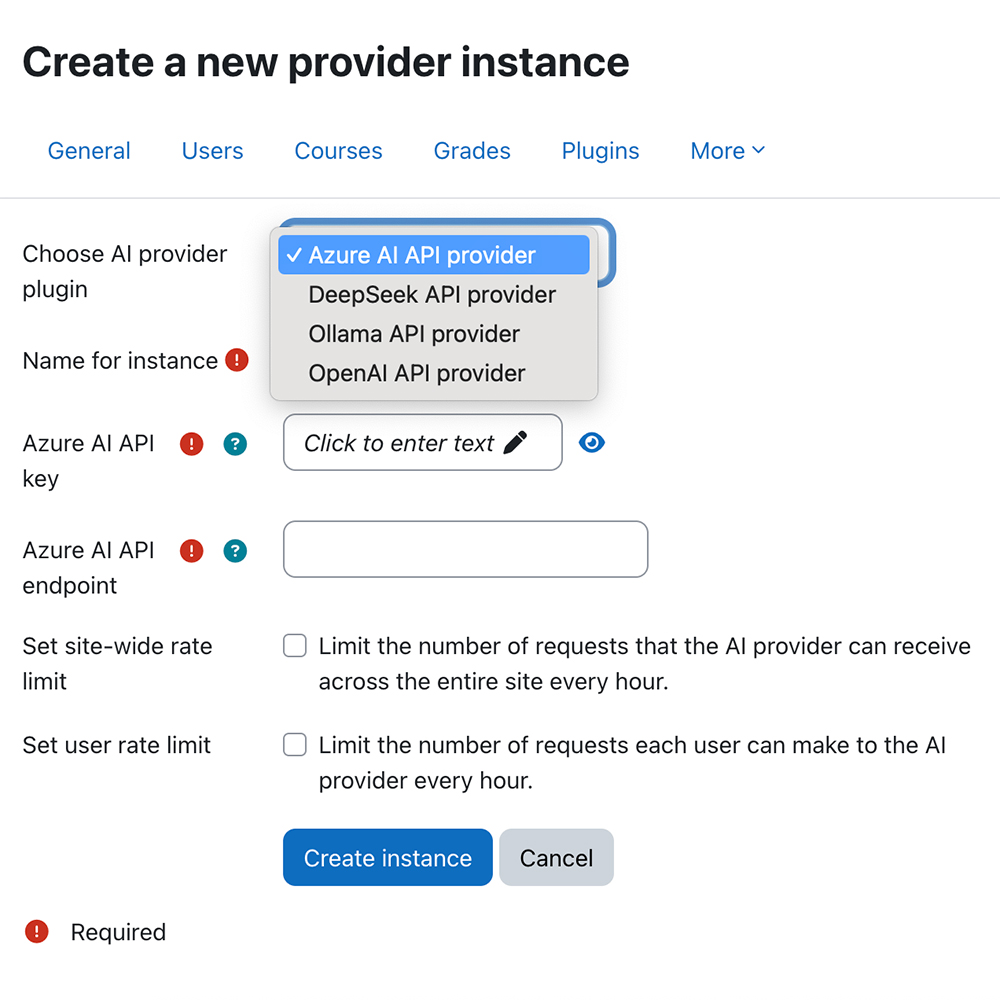
1. AI Providers
These plugins enable Moodle to communicate with external AI services such as OpenAI and Azure AI. Administrators retain control by configuring and managing providers through dedicated settings.
2. AI Placements
AI placements define where AI functionality is available within the platform. Leadership and administrators can determine which areas of the LMS allow AI-supported actions, maintaining oversight and limiting inappropriate use.
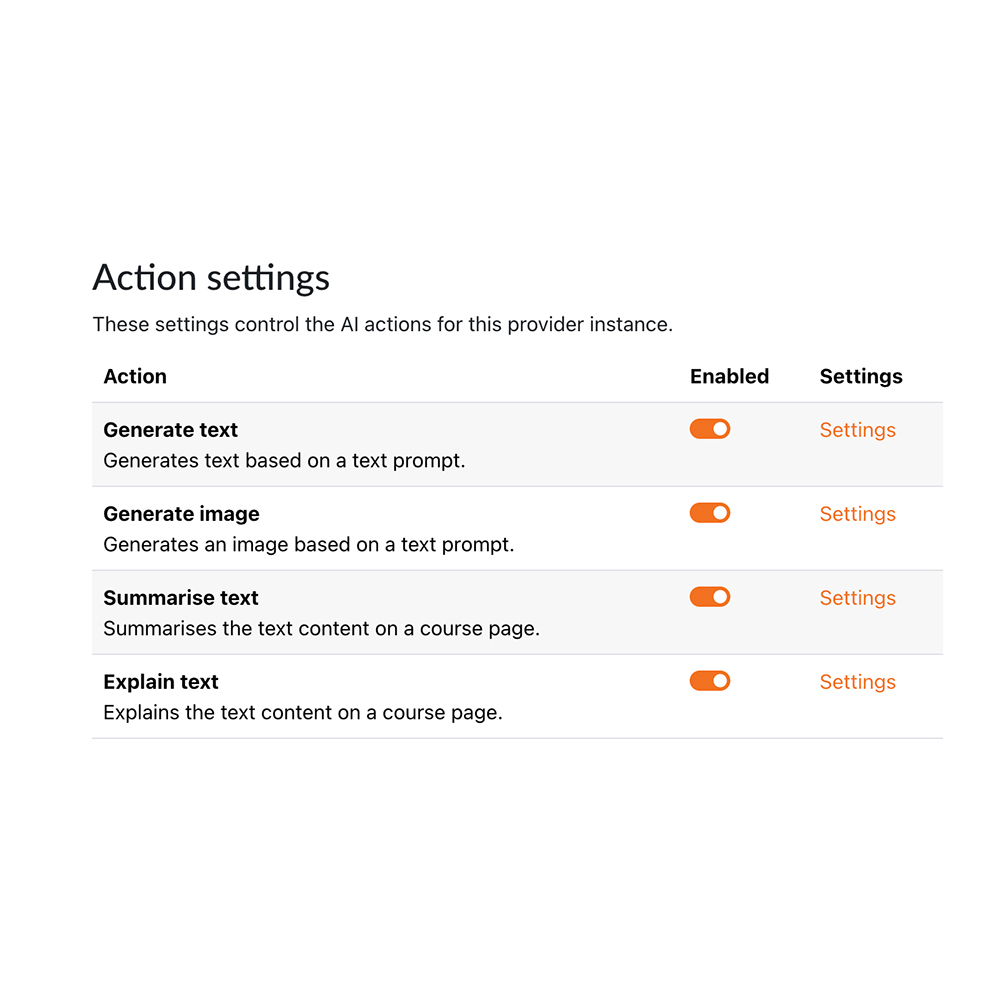
3. AI Actions
AI actions are the specific tasks the subsystem performs, such as text generation, image generation within the editor, and course content summarisation.
This layered approach ensures AI is not embedded indiscriminately. It is configurable, governable, and transparent.
The Leadership Imperative
Technology does not determine culture — leadership does.
Responsible AI adoption in organisational learning requires leaders to:
- Define acceptable use policies
- Establish governance around AI-generated content
- Ensure transparency in how AI is used
- Protect data privacy and intellectual property
- Align AI capabilities with learning strategy
Without clear leadership, AI risks becoming a novelty feature or, worse, a compliance exposure.
With clear direction, AI becomes a productivity and innovation accelerator.
Human + AI: Augmentation, Not Replacement
The real opportunity lies in augmentation.
AI within Moodle can:
- Support educators in drafting content
- Help summarise complex course materials
- Enhance productivity in course development
- Improve learner engagement through smarter content workflows
But human oversight remains critical. Subject matter expertise, ethical judgement, and contextual understanding cannot be automated.
The future of organisational learning is not automation alone — it is informed human decision-making supported by intelligent tools.
Want to explore how AI can be integrated responsibly into your Moodle environment?
Discover how structured AI adoption can enhance learning while maintaining control and compliance.